
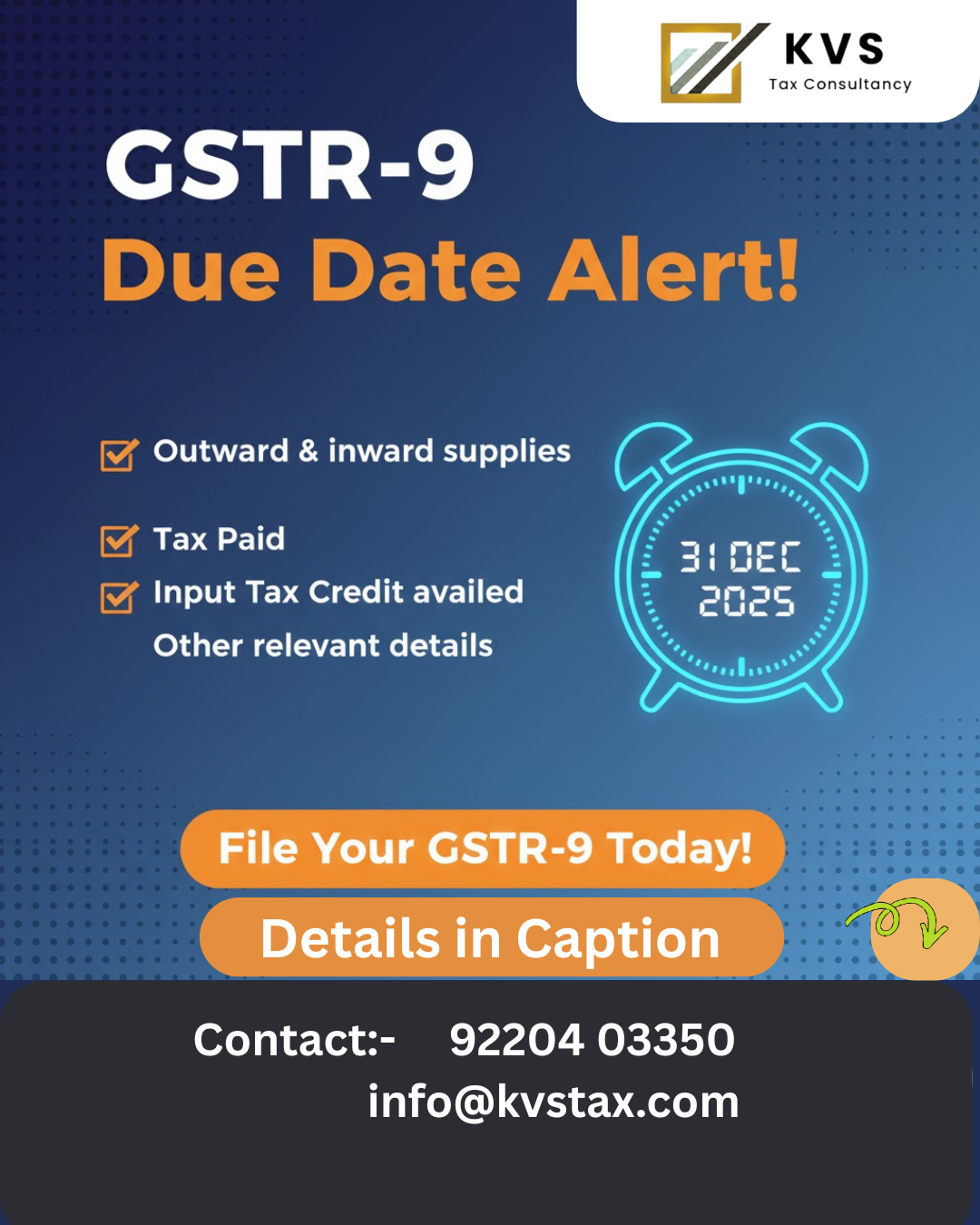
Form GSTR-9 is an annual return under GST that consolidates the details of outward supplies, inward supplies, taxes paid, input tax credit availed, refunds claimed, and demands raised during a financial year. It provides a complete summary of a taxpayer’s GST activities for the year.

Who Has to File GSTR-9?
✅ Mandatory Filing
GSTR-9 filing is mandatory if the aggregate turnover exceeds ₹2 Crore during the relevant financial year.
⚠️ Optional Filing
If the aggregate turnover is up to ₹2 Crore, filing of GSTR-9 is optional, subject to notifications issued by the Government from time to time.
📌 Applicable To
GSTR-9 is applicable to the following categories of taxpayers:
- Regular GST taxpayers
- Composition taxpayers, who are required to file Form GSTR-9A, wherever applicable
- SEZ units and SEZ developers
- Taxpayers who opted out of the composition scheme and became normal taxpayers during the financial year
❌ Not Required to File GSTR-9
The following categories of taxpayers are not required to file Form GSTR-9:
- Input Service Distributors (ISD)
- TDS / TCS deductors
- Casual taxable persons
- Non-resident taxable persons
- OIDAR service providers
FAQs – About Form GSTR-9
1. What is Form GSTR-9?
Form GSTR-9 is an annual GST return to be filed once for each financial year by registered regular taxpayers, including SEZ units and SEZ developers. It contains consolidated details of purchases, sales, input tax credit availed, refunds claimed, and demands raised during the year.
2. Who needs to file Annual Return in Form GSTR-9?
Form GSTR-9 must be filed by:
- Normal registered taxpayers
- SEZ units and SEZ developers
- Taxpayers who switched from composition scheme to normal scheme at any time during the financial year
Note:
- Composition taxpayers file Form GSTR-9A
- Casual taxpayers, non-resident taxpayers, ISD, and OIDAR service providers are not required to file GSTR-9
3. What is the difference between Form GSTR-9 and Form GSTR-9C?
- Form GSTR-9 is an annual return required to be filed by normal registered taxpayers, subject to exemptions notified by the Government.
- Form GSTR-9C is a reconciliation statement applicable to taxpayers whose aggregate turnover exceeds the prescribed threshold. Such taxpayers must get their accounts audited by a Chartered Accountant or Cost Accountant and submit audited financial statements along with the reconciliation statement.
4. Is it mandatory to file Form GSTR-9?
Yes, filing of Form GSTR-9 is mandatory for normal taxpayers. However, for taxpayers with Annual Aggregate Turnover (AATO) up to a specified threshold, filing may be made optional, as notified by the Government from time to time.
Conclusion
Form GSTR-9 plays a crucial role in ensuring GST compliance and transparency. Taxpayers should carefully review their books of accounts and GST returns before filing to avoid discrepancies, notices, or penalties.
For professional assistance in GSTR-9 filing, reconciliation, and compliance, expert guidance can help ensure accurate and timely submission.